 Bananagrams
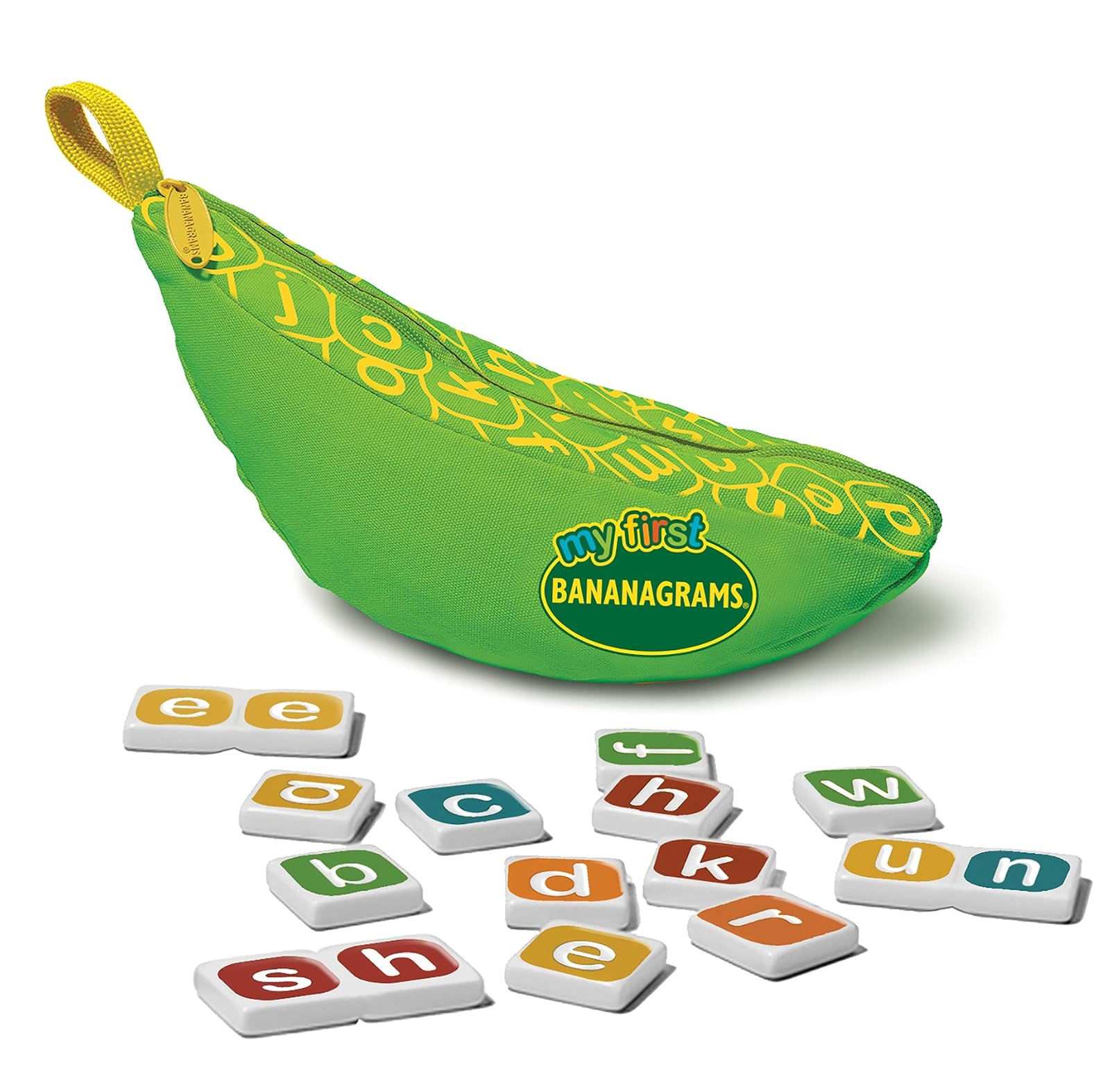
Lowercase tiles for brand-new readers
My First Bananagrams
Thirteen combo tiles carry two letters together so early readers can snap common sounds right into their words.
$14.99
Rated 4.8 out of 5 by 2,543 players
Lowercase letters match the shapes a child sees on the pages of an early reading book. We pack them here into a real-time race where nobody waits around for their turn to spell.
Hands reach across the bare table at once as players connect words into their own grids. When someone uses their last letter, the call forces a fresh tile on everyone.
| Players | 1–4 |
| Ages | 4 and up |
| A game runs | About 30 minutes |
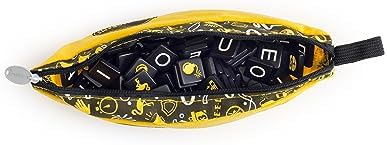
| In the box | 80 single letter tiles plus 13 combo-letter tiles, in a banana pouch |
| You also need | A table, and a child who knows some of their letters. |
| The feel | Everyone plays at once |
How a game unfolds
The race itself is unchanged from Bananagrams; the tiles are lowercase, and thirteen of them carry a letter pair.
Split once
Turn all the tiles face down in the middle. That pile is the bunch. Each player draws their opening hand and flips it on the call.
Build all at once
Every player builds their own crossword grid at the same time. There are no turns to wait for.
Peel repeats
Empty your hand and say so. Everyone draws one more, and the bunch shrinks by one per player.
Bananas ends it
When the bunch runs below the number of players, the next grid to go clean wins the check and the game.
The combo tiles
The thirteen combo tiles are not wilds. Each carries a pair of letters that go down together, so a hand that has found the sound does not also have to find two separate tiles for it. The rest of the pouch is lowercase, which is the shape of the alphabet a child meets in a reading book rather than on a block.
What makes it its own game
- White tiles show letters inside colored squares of green, orange, teal, red, or yellow.
- Calling Peel hands one tile to every player at the table, including the one who called it.
- Trading a single troublesome piece via Dump adds two extra tiles to your personal supply.
- Failing the grid check on a disallowed word removes that player from the game completely.
Worth knowing before you open the box
The pouch holds 93 tiles against the classic 144, and the listing runs to four players rather than eight. Both numbers point the same way: shorter hands, a smaller table, a game that ends before a four-year-old is done with it.
Who it suits
This edition suits early readers who know part of the alphabet and want to build their first words. The smaller tile count keeps the race brisk for four-year-olds. Fast, fluent spellers will outgrow this pouch quickly and should choose a larger game instead.
Before your first game
Sort out the thirteen double-letter pieces before starting your first race. Sit with the beginner, lay those pieces face up, and pronounce each letter pair out loud together. Once those sounds are familiar, flip everything face down and call Split.
Elsewhere on the shelf
Still reading? That is usually a yes.
The same race in lowercase, with thirteen tiles that carry a letter pair instead of a letter.
$14.99