 Bananagrams
Where the game came from
Updated September 4, 2026 · 2 min read
Abraham Nathanson invented the game in 2005 after growing impatient with the pace of Scrabble while playing his grandson. He wanted an anagram game fast enough to drive a player bananas, drawing mechanics directly from Take Two.
The short version
- Look to Take Two for the original rules framework that inspired the design.
- Note the year 2006 for the first public presentation at the London Toy Fair.
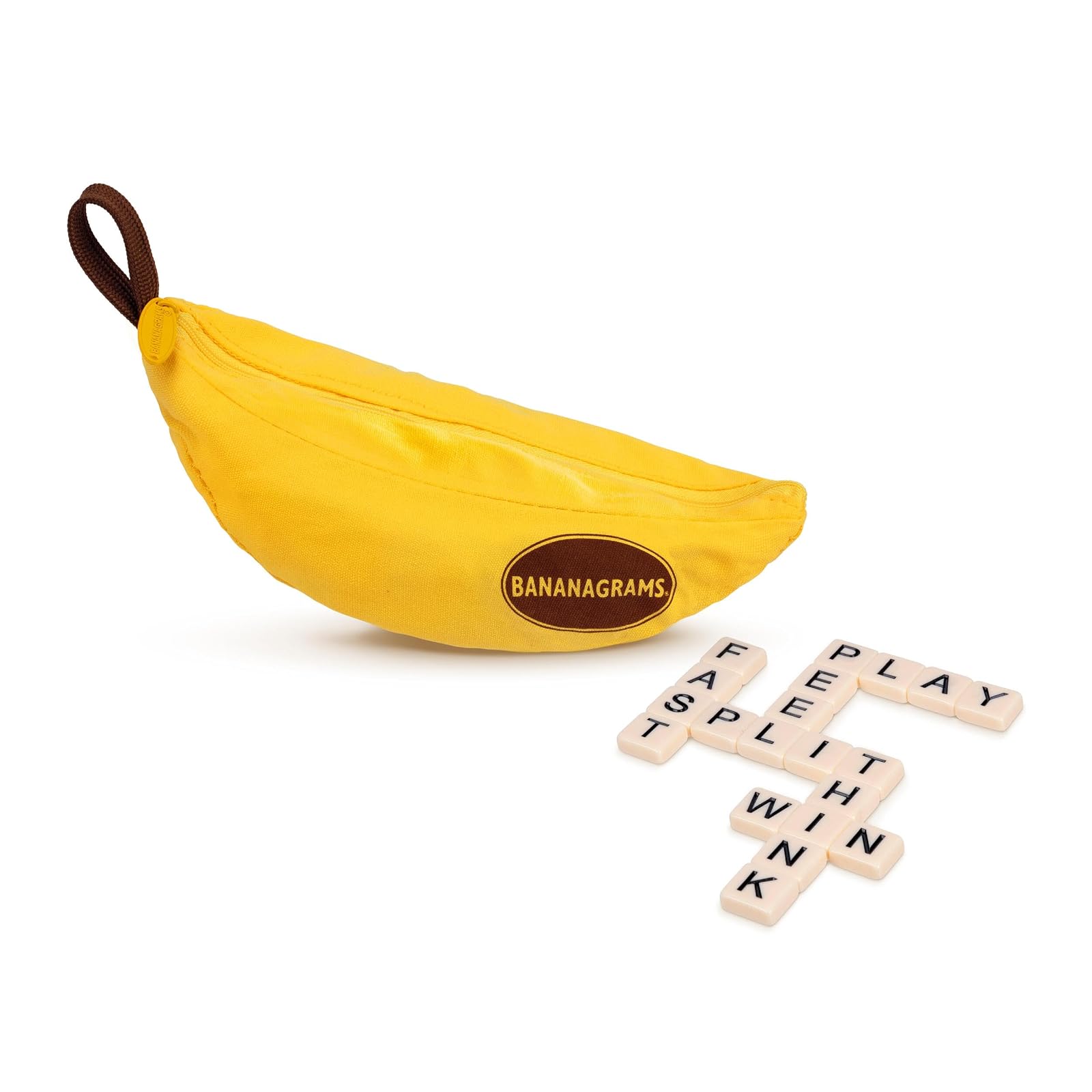
- Check the pouch design, which was created by Nathanson's former wife.
- Match foreign language sets to German, Italian, Spanish, French, or Hebrew.
Abraham Nathanson was born in Pawtucket, Rhode Island, in 1929 to a father who sold fruit. After leaving the army, he spent one year studying graphic design at Pratt Institute before opening his own design studio back in Pawtucket. At age 76, he set out to build a faster tile game.
| When | What happened |
|---|---|
| 1929 | Abraham Nathanson is born in Pawtucket, Rhode Island. His father sells fruit for a living. |
| after the army | He studies graphic design at Pratt Institute, leaves after a year, and opens a design studio back in Pawtucket. |
| 2005 | Losing patience with a slow game of Scrabble against his grandson, he sets out to build a word game with the speed put back in. He told the Boston Globe: we need an anagrams game so fast, it will drive you bananas. He was 76. |
| first run | Fifty copies get made. His daughter sells half of them in England, the rest go in the United States. Another five hundred follow and sell out too. |
| 2006 | The game reaches the public at the London Toy Fair in January. The banana pouch was designed by his former wife. |
| 2009 | The Toy Industry Association names it game of the year, and three million copies sell that year. |
| 2010 | Nathanson dies at 80 at his summer place in Narragansett, survived by three daughters and four grandchildren. |
The first run consisted of fifty copies. His daughter sold half in England while the rest sold in the United States, followed by another run that also sold out completely. Nathanson's former wife designed the banana pouch, and the game reached the wider public at the London Toy Fair in January 2006.
The Toy Industry Association named it game of the year in 2009, when three million copies sold. Nathanson died in 2010 at age 80 at his summer place in Narragansett, survived by three daughters and four grandchildren. The idea itself traces back to Take Two, an older Scrabble variant that uses the same mechanics.
Foreign language editions include German, Italian, Spanish, French, and Hebrew. Other related games on the same shelf are Anagrams, Dabble, Perquackey, Quiddler, Syzygy from 1997, and Double Quick from 1999.
The mistake to avoid
It is tempting to credit the core mechanic as an entirely new invention. The mistake is to overlook Take Two, which is the older Scrabble variant that works the exact same way.
Questions that keep coming up
Who designed the banana pouch?
Abraham Nathanson's former wife designed the pouch.
When did the game debut publicly?
It debuted at the London Toy Fair in January 2006.
What languages has the game appeared in?
It has been published in German, Italian, Spanish, French, and Hebrew.
The same race, still in a banana
Two decades on, the pouch on our shelf is the one this story built. It still opens on any flat surface you have.