 Bananagrams
How it compares
Updated September 4, 2026 · 2 min read
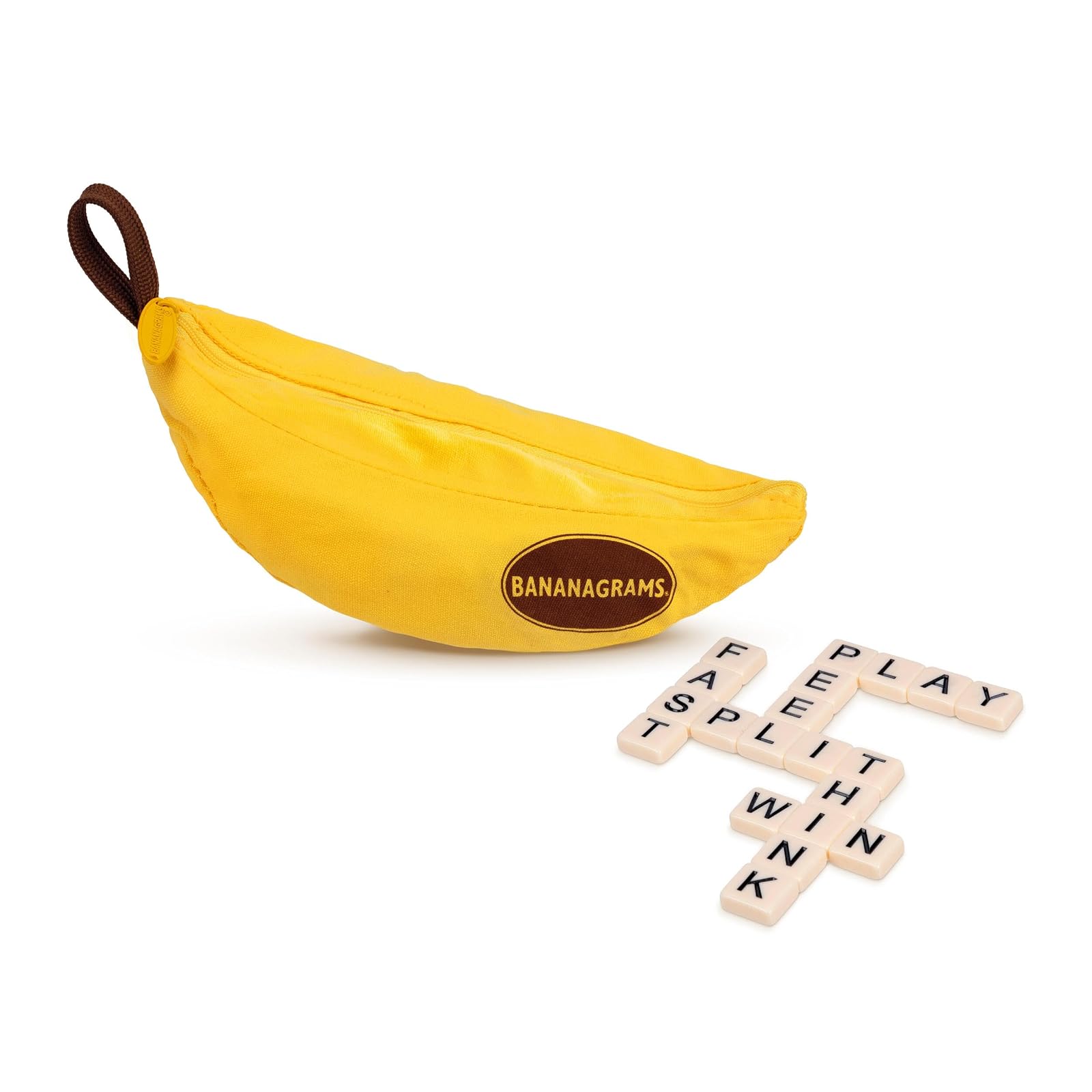
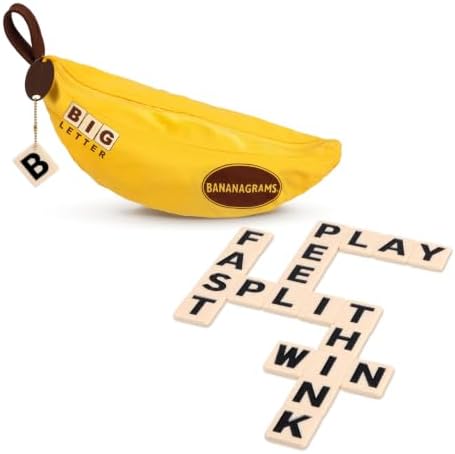
This is not the same game in a pouch. Both games use interlocking crossword grids, but this game removes the board, removes letter scores, and removes turns entirely so everyone builds simultaneously.
The short version
- Build your own connected grid right on the table instead of sharing a single board.
- Ignore point values because the tiles do not have scores printed on them.
- Play at the same time as everyone else without taking turns.
- Rearrange your existing words whenever your grid stops accepting new tiles.
The physical setup is different from Scrabble. You do not place tiles on a shared board with premium squares. Instead, every player builds an independent grid directly on the table using their own letters. There are no score sheets to keep and no point values on individual tiles.
Turn structure is also gone. Nobody waits for another player to calculate a high-scoring move. The objective is simply to place every tile in your hand into a valid grid. When a grid can no longer take incoming tiles, you pull it apart and rearrange the words to fit what you hold.
Abraham Nathanson designed the game in 2005 after growing impatient with a slow game of Scrabble played against his grandson. He wanted a game that brought speed back to word building. The design drew on Take Two, an older Scrabble variant, and launched publicly at the London Toy Fair in 2006.
The mistake to avoid
The mistake is to assume you must keep your placed words intact. In Scrabble, words on the board are fixed. Here, you are required to take your own grid apart and rebuild it whenever you need to accommodate new tiles.
Questions that keep coming up
Do the tiles have point values?
No. The tiles do not have letter scores on them, and players do not count points at the end.
Do players take turns?
No. Everyone plays simultaneously, so nobody waits for another person to complete a move.
How does this compare to Boggle?
Both games have everyone play at the same time, but here you assemble a connected crossword grid of tiles rather than finding words in a fixed box of dice.
Settle it at the kitchen table
No board, no score pad, no waiting for your turn. One round is the fastest way to end the argument.